
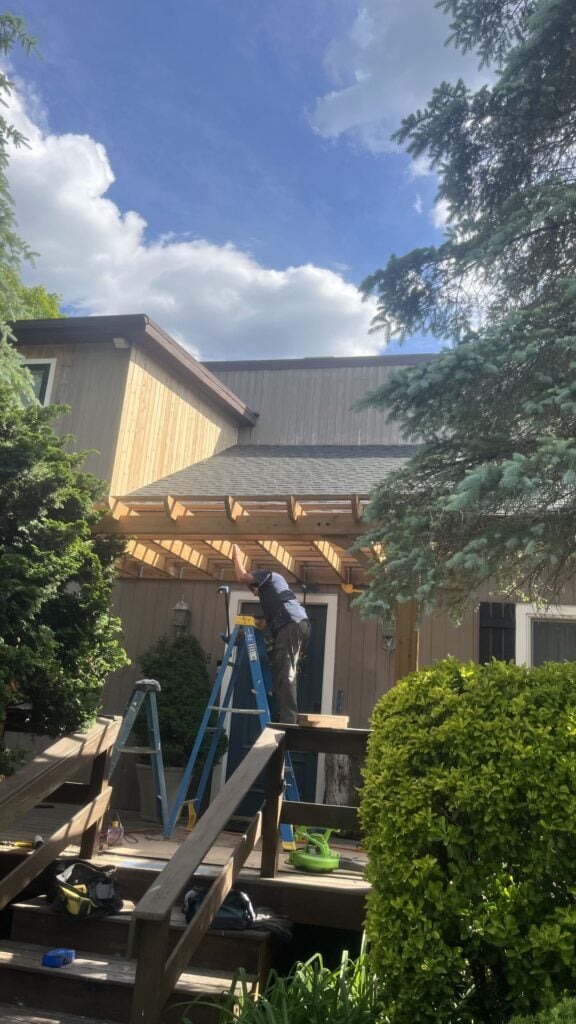
Decks
New decks and deck repairs, built solid from the footings up
New decks, rebuilt stairs and railings, and fresh boards on a frame that's still good. We check what's underneath before we talk about what goes on top.
- Fully insured

What we find on older Long Island decks
The boards are what you see. The trouble is usually underneath.
-
Soft boards and rot
Boards that give under your foot, split ends, and rot where water sits around posts and at the house.
We probe the boards and the framing, and replace only what's actually gone.
-
A loose connection to the house
The board that ties the deck to the house (the ledger) is the most important part, and the most often done wrong.
We check how it's fastened and flashed, and fix it before anything else.
-
Wobbly railings and stairs
Posts that move when you lean on them and stair treads that bounce or pull away.
We rebuild railings and stairs so they're solid, not just tightened up.
-
Gray, splintered surface
Sun and salt air wear the top of the wood down, even when the frame is fine.
If the frame is sound, new boards and railings can save you a full rebuild.
How a deck job works with us
We look at the whole deck, tell you straight whether it's a repair or a rebuild, and put it in writing.
-
Look it over
We check the footings, posts, framing, ledger, stairs and railings, and measure the space.
-
Plan and price
Size, shape, material, stairs and railing style. You get a written, itemized price and a start date.
-
Build the frame
Old deck comes off if needed. Footings, posts, beams and joists go in, tied into the house properly.
-
Boards, stairs and railings
Decking goes down with even gaps, then stairs, railings and any trim around the edges.
-
Clean up and walk through
We haul away the debris, clean the yard, and walk the deck with you.
Deck work we do
From a few rotten boards to a whole new deck off the back of the house.
- New decks off the kitchen or back door
- Second-story decks on high ranches
- Low ground-level decks and platforms
- Replacing rotted boards and joists
- Rebuilding stairs and railings
- Resurfacing on an existing frame
- Deck skirting and lattice
- Getting a deck ready before you list the house
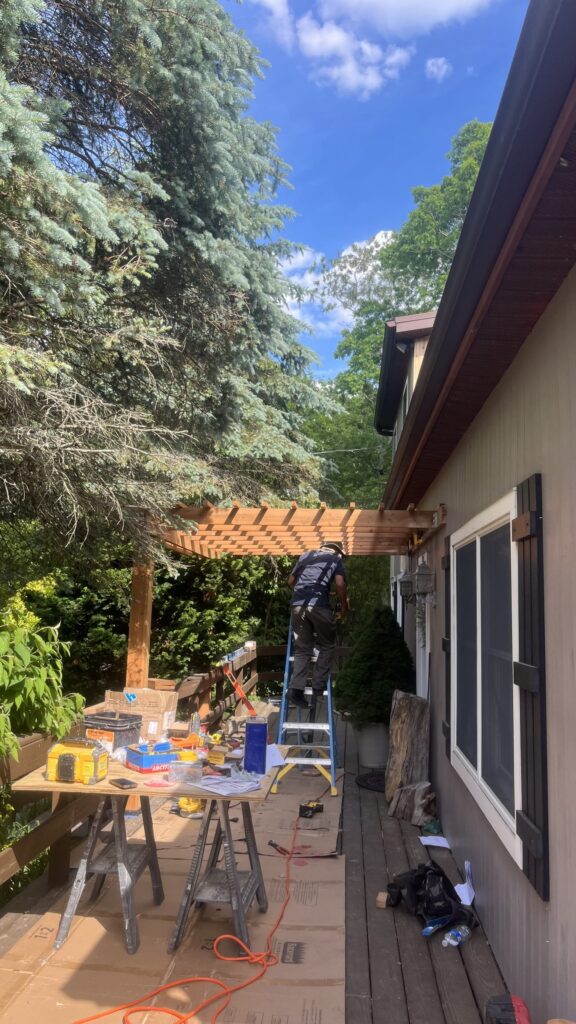

Decks for the way Long Island houses are built
A lot of the decks we look at are on high ranches, where the back door is a full story up and the deck sits on tall posts. Those decks take the most weather and the most weight, and when they start to go, it’s usually at the posts, the stairs, or where the deck meets the house. On capes and ranches, the deck is often low to the ground, which keeps it easy to use but means the framing stays damp and rots from below.
Either way, we start underneath. We look at the footings, check the posts for rot at the bottom, and poke at the joists where water sits. Then we look at the ledger, the board bolted to the house that holds up one side of the deck. If it’s only nailed on, or water has been running behind it for years, that gets fixed before we talk about new boards.
Repair, resurface or rebuild
Not every tired deck needs to come down. If the frame is solid, we can put new boards, stairs and railings on it and you get what looks like a new deck for less. If the frame is rotted or the footings have sunk, new boards won’t fix it, and we’ll tell you that straight. We’d rather give you an honest answer than sell you a surface job that won’t last.
Stairs and railings come first
If there’s one part of an older deck we worry about most, it’s the stairs and railings. They get the most hands and feet on them, and they’re usually built lighter than the rest of the deck. A railing post that moves when you lean on it, or a stair stringer that has pulled away at the top, is worth fixing right away, even if the rest of the deck can wait a season. We rebuild those parts so they’re solid, not just add a few more screws.
Salt air, sun and shade
Houses near the Great South Bay in Sayville, Bayport and Blue Point see more salt and moisture, and that’s hard on wood and on fasteners. Decks in full sun gray out and crack faster. Decks under big trees stay damp and grow mildew. We factor all of that in when we help you pick boards, railings and hardware.
Keeping it looking good
A wood deck needs regular cleaning and a fresh coat of sealer or stain to stay in good shape. We also do power washing, so we can clean and prep an older deck or care for a new one down the road. If the house itself needs work, like a roof leak over the deck or a sticking slider, our same crew can take care of it.
Before we come out
- Photos of the deck from the yard, and the underside if you can get to it
- Whether you want a repair, new boards, or a new deck
- Any ideas on size, stairs or railing style
- Anything you already know about permits for the existing deck
Deck questions
How much does a new deck cost?
The biggest things are the size, how high it sits off the ground, the boards and railings you choose, and the number of stairs. Tearing out an old deck adds to it. We measure and give you a written, itemized price before any work starts.
Should I repair my deck or replace it?
If the footings, posts and framing are solid, new boards and railings can be a good move. If the frame is rotted or the connection to the house is bad, putting new boards on it is money wasted. We'll show you what we find.
Wood or composite?
Wood costs less up front and is easy to repair. Composite takes less upkeep and doesn't splinter, but it costs more and can get hot in full sun. We'll go over both for your yard and your budget.
Do I need a permit for a deck?
New decks usually do, and the rules differ from town to town and village to village. Check with your town's building department, and bring it up when we come out so we can plan around it.
Can you fix just the stairs or the railing?
Yes. A loose railing or a bouncy stair is a safety problem on its own, so we can repair just that part and leave the rest of the deck alone.
How long does it take?
It depends on the size of the deck, the weather, and whether we're repairing or building new. Your written price includes a start date and how long the job will take.
Get a price on your deck.
Tell us whether it's a repair or a new deck, and send photos of the whole deck and the underside if you can.
631-745-9982- Price in writing before any work starts.
- One crew from start to finish.
- Fully insured