
Homeowner questions
Porcelain vs. ceramic tile: what should I choose?
Both are fired clay tile, and both can look great. The difference is density, water absorption and how easy they are to cut. Here's where each fits.
- Fully insured
The short answer
Choose porcelain for floors, showers, basements and anywhere that gets heavy wear or lots of water, because it's denser and absorbs less water. Choose ceramic for most walls and backsplashes, where it's lighter, easier to cut and usually costs less. Both are fired clay tile, and both hold up well when they're installed on a properly prepared surface.
What’s actually different
Porcelain and ceramic are both made from clay that’s shaped and fired in a kiln. Porcelain uses a more refined clay and is fired hotter. That makes it denser and harder, and it soaks up very little water. Ceramic is a little softer and more porous under its glaze.
In a finished room, you often can’t tell them apart by looking. The differences show up in where they’re used, how they wear, and how they’re installed.
Where porcelain makes sense
- Floors, especially kitchens, entries and mudrooms where there’s grit, boots and dropped pans.
- Shower floors and walls, where the tile stays wet.
- Basements, where moisture comes up through the slab.
- Big format tile. Most large tiles and wood-look planks are porcelain.
- Outdoor use, since low water absorption helps it stand up to freezing and thawing, which matters on Long Island.
Many porcelain tiles are through-body or color-body, which means the color runs partly or all the way through. If one chips, it’s less obvious than a chip in glazed ceramic, where lighter clay can show under the glaze.
Where ceramic makes sense
- Walls and tub surrounds, which don’t take foot traffic.
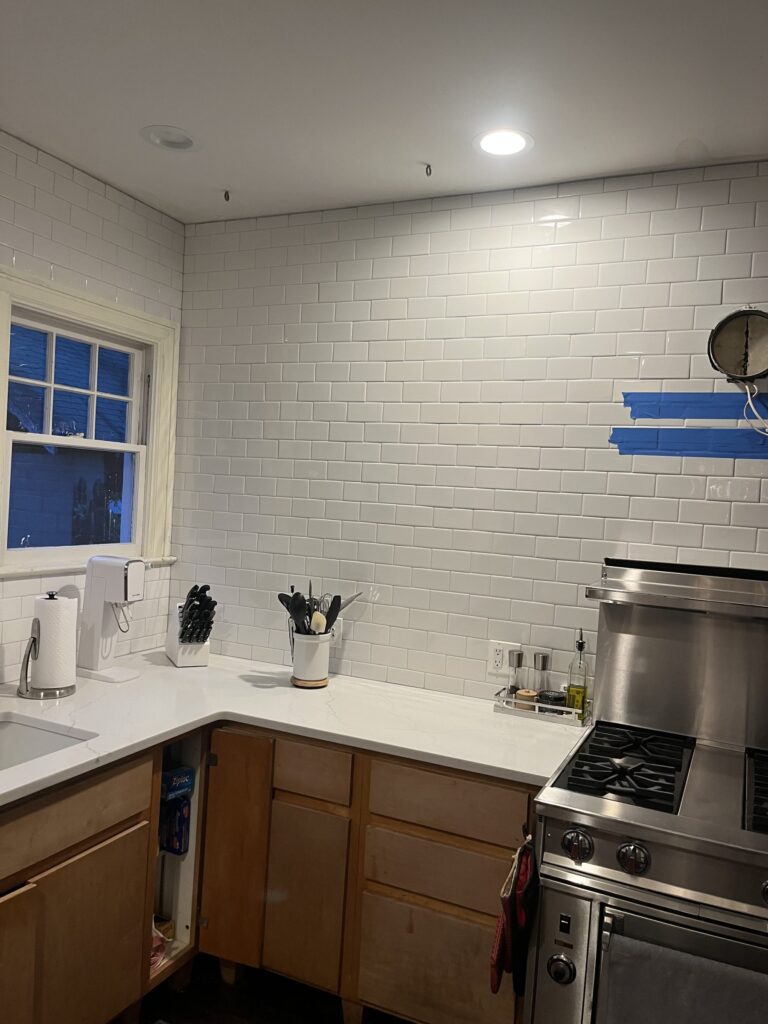
- Kitchen backsplashes, including classic subway tile.
- Light-use floors, like a powder room or a bedroom closet, as long as the tile is rated for floors.
- Bright colors and handmade looks, which are often easier to find in ceramic.
Ceramic is lighter and softer, which makes it easier to cut around outlets, windows and pipes. That can make wall work go more smoothly.
Cost and install
Porcelain often costs more per box, though there’s a lot of overlap. The install can cost more too. Porcelain is harder to cut and drill, and large porcelain tiles need a very flat floor and the right thinset (the mortar that holds tile down) so they stay bonded. Ceramic is more forgiving to work with.
For most homeowners, the right question isn’t which is cheaper. It’s which will hold up in that room without problems.
Check the rating, not just the label
Tile is rated for how much wear it can take. Some tiles are sold for walls only, and putting them on a floor can lead to scratches, worn glaze or cracks. Tile labeled porcelain should have low water absorption, so ask to see the specs if you’re unsure. Also look at slip resistance for bathroom and shower floors, since glossy tile can be slick when wet.
What matters more than the tile
Here’s the honest part: most failed tile jobs aren’t about porcelain versus ceramic. They’re about what’s underneath. Tile cracks when the floor flexes, when the surface isn’t flat, or when the thinset didn’t fully bond. Showers leak when the waterproofing wasn’t done right. The best tile in the store won’t fix a bad base.
That’s why we spend real time on prep: checking the floor for bounce, flattening it, using the right backer board, and waterproofing wet areas before any tile goes up.
Grout and edges
Whichever tile you pick, the grout is part of the look and the upkeep. Tight grout lines look clean with large, straight-edged tiles, which are common in porcelain. Wider lines suit handmade-style ceramic. On floors and in showers, grout should be sealed or chosen to resist stains. Edges matter too. Where tile stops at a wall, a window or the side of a tub, we use a finished edge piece or a slim metal trim so no raw cut edge shows. Some tile lines come with matching bullnose pieces, which are rounded edge tiles, and some don’t, so it’s worth asking before you buy.
A simple way to decide
- Floor or shower? Lean porcelain.
- Wall or backsplash? Ceramic is usually fine, porcelain is fine too.
- Basement or outside? Porcelain.
- Love a specific look? Check that it’s rated for where you want it, then go with it.
Next step
Bring us the tiles you like, or photos, and we’ll tell you whether they’re right for the space and what the install involves. Our tile installation page shows how we lay floors, showers and backsplashes, or call 631-745-9982.
Related questions
Is porcelain tile slippery?
It depends on the finish, not the material. Polished porcelain can be slick when wet. Matte or textured tiles, and small tiles with more grout lines, give better grip on bathroom and shower floors.
Can ceramic tile be used on a shower floor?
Some ceramic tiles are rated for floors and wet areas, but porcelain is the more common choice for shower floors because it absorbs less water. Small mosaics are popular because they follow the slope to the drain.
Does porcelain tile crack easily?
No, it's very hard and dense. When porcelain cracks, it's usually because the floor under it flexed or wasn't flat, not because of the tile.
Get a price for your project.
Tell us a little about it and we'll call to set up a time to come see it. Rather talk? Just call.
631-745-9982- Price in writing before any work starts.
- One crew from start to finish.
- Fully insured