
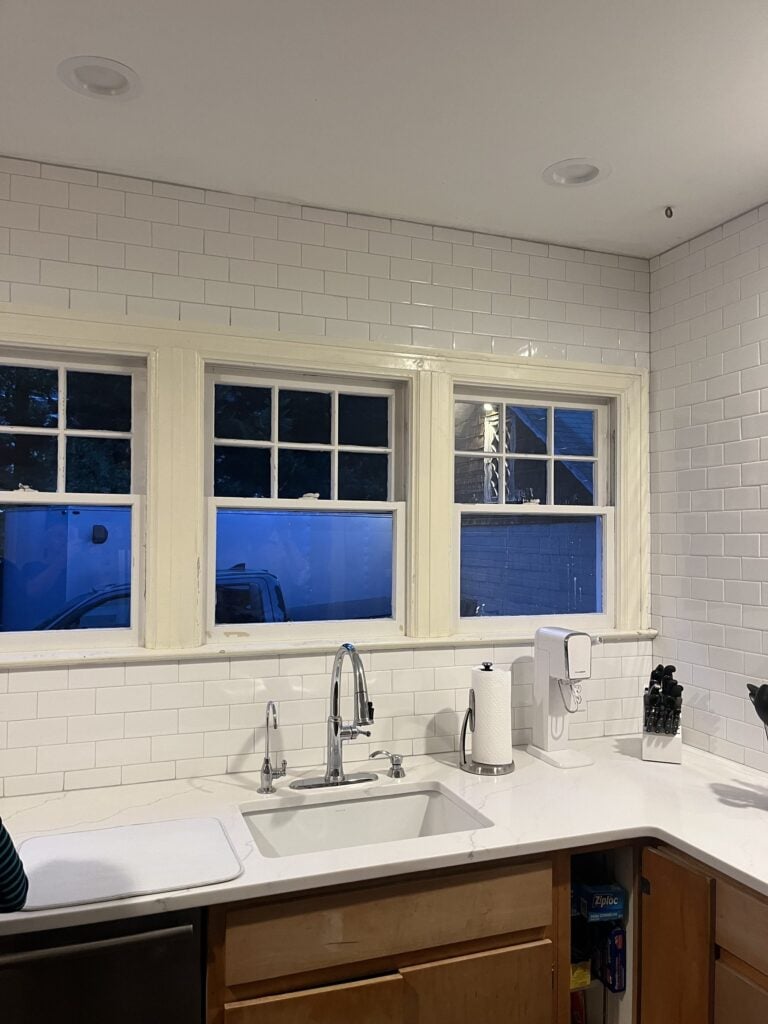
Tile installation
Tile floors, showers and backsplashes, set flat and straight
Bathroom floors, tiled showers, kitchen backsplashes and entry floors. We fix what's underneath first, so the tile stays put and the lines stay straight.
- Fully insured
Where tile jobs go wrong
Tile is only as good as what it's stuck to. Most of the problems start before the first tile goes down.
-
Cracked tile and grout
Tile set over a floor that flexes, like thin subfloor over old joists, will crack along the grout lines.
We check the floor for bounce and stiffen it before we tile.
-
Edges that stick up
Big tiles on a floor that isn't flat leave corners you can catch a toe on. Installers call it lippage.
We flatten the floor first and use a leveling system on large tile.
-
Leaks behind the shower wall
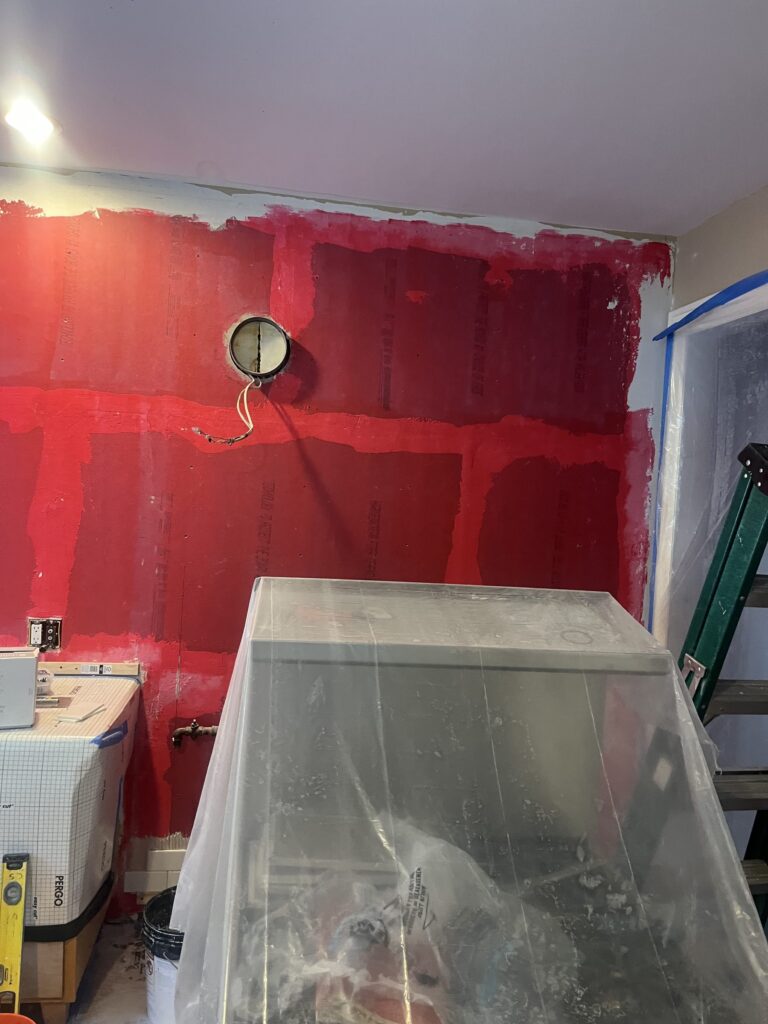
Grout and tile aren't waterproof on their own. Water gets through and rots the wall behind it.
We put a waterproof layer behind every shower wall and under the pan.
-
Crooked lines and slivers
Start in the wrong corner and you end up with skinny cut pieces at the door or tub.
We lay the room out dry first so cuts land where you won't notice them.
How a tile job works with us
One crew does the demo, the prep, the tile and the trim around it. You get a written price and start date before we begin.
-
Look at the room
We check the floor for bounce, the walls for rot or soft spots, and measure for layout.
-
Tear out and prep
Old tile comes out. We repair the subfloor, put down backer board or a membrane, and waterproof wet areas.
-
Lay out and set
We snap lines, dry-fit the pattern so the cuts come out even, and set the tile flat.
-
Grout and finish
Grout, caulk at the corners and the tub, then new baseboard or trim if the room needs it.
-
Clean up and walk through
We clean the tile and the room, then go over it with you.
Where we set tile
Anywhere water, mud or heavy traffic would ruin another floor.
- Bathroom floors
- Tub surrounds and tiled showers
- Kitchen backsplashes
- Kitchen floors
- Entryways and mudrooms
- Laundry rooms
- Basement bathrooms
- Fireplace surrounds
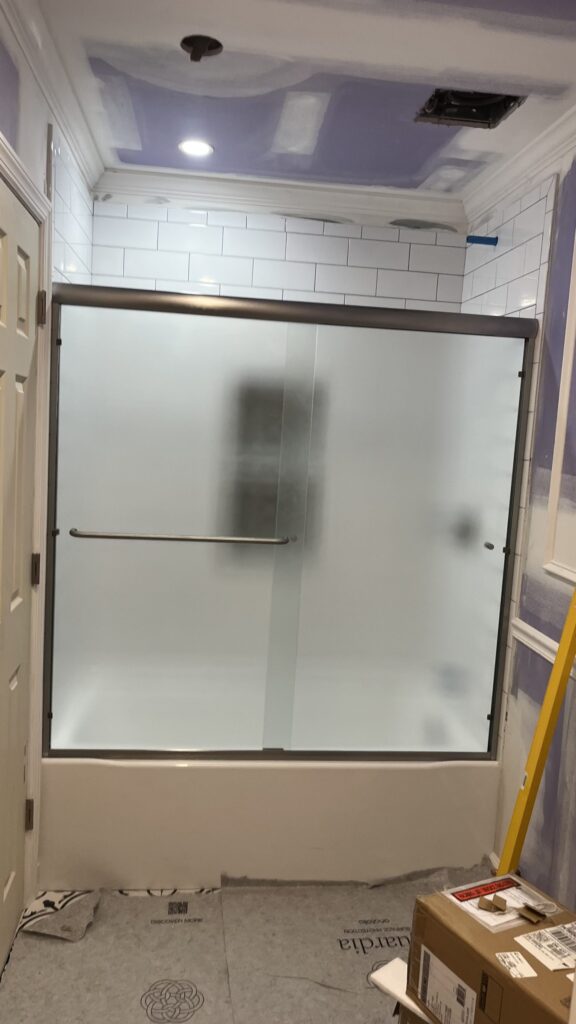
Tile work for Long Island bathrooms and kitchens
A lot of the bathrooms we see in high ranches, capes and split-levels around Medford and Sayville still have the original tile. Some of it is solid and just dated. Some of it is loose, cracked, or hiding a soft spot in the floor from a slow leak at the toilet or tub. Before we quote new tile, we find out which one you have, because that changes the whole job.
If the floor bounces when you step near the tub, we fix that first. Tile over a floor that flexes will crack no matter how good the tile is. That can mean new subfloor, extra blocking between the joists, or a membrane that lets the tile move a little without breaking.
Showers that stay dry behind the wall
People are surprised to hear that grout isn’t waterproof. Water soaks through it every time you shower. What keeps your wall dry is the layer behind the tile. We put a waterproof membrane or coating on the shower walls and floor, slope the floor to the drain, and seal around the valve and the niches. When we open up an old shower and find rotted studs, it’s almost always because that layer was skipped.
Backsplashes and kitchen floors
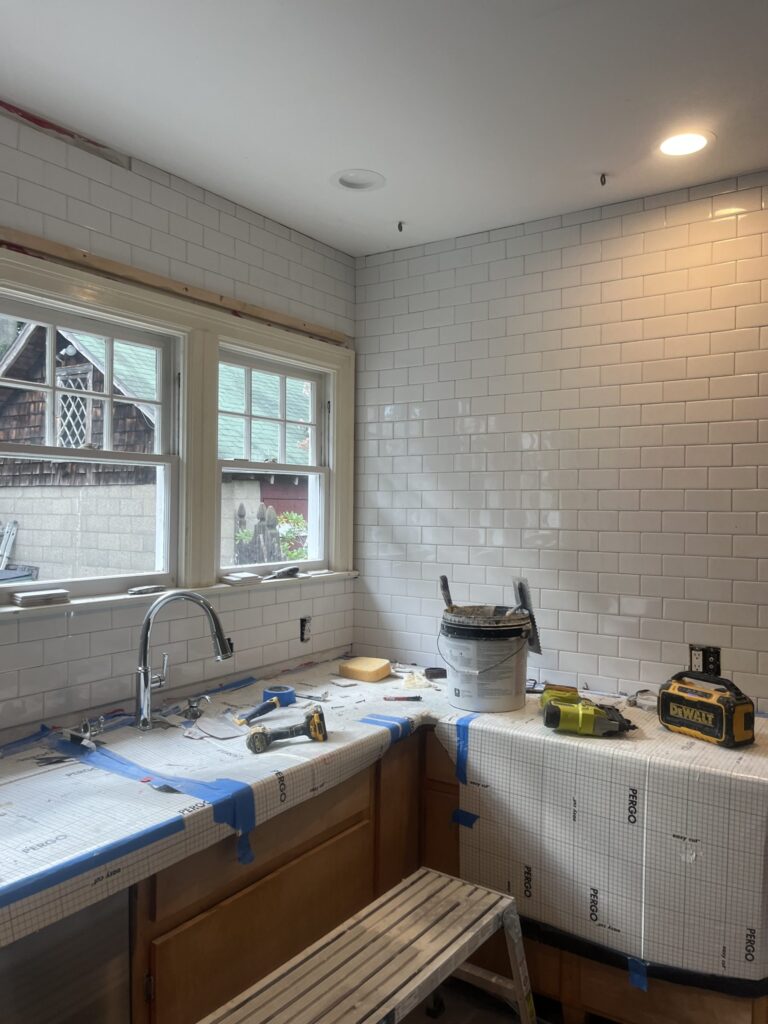
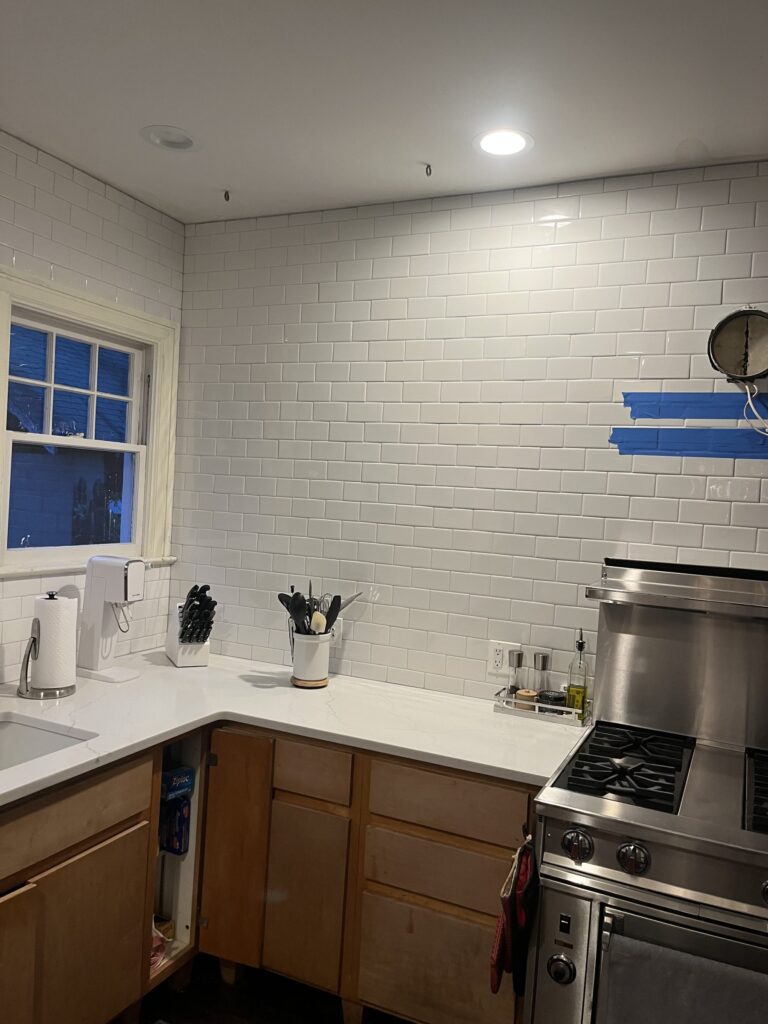
A backsplash is one of the quickest ways to change how a kitchen looks. We work around the outlets, the window trim and the ends of the counter so the cuts are small and even. If you’re also getting new cabinets, we can install them first and tile right up to them, so you’re not trying to line up two contractors.
Kitchen and entry floors take a beating from sand, salt and wet boots, which is why a lot of Long Island homeowners want porcelain at the back door. We’ll help you pick a tile and grout that handles the traffic.
Picking a layout you’ll like
Before any thinset gets mixed, we lay the tile out dry in the room or on the floor next to it. That’s when we decide where the pattern starts, where the cuts land, and how the lines meet the tub, the vanity and the doorway. It’s a small step that makes a big difference. A floor that starts from the center of the room with even cuts at each wall looks planned. A floor that starts in a corner and ends with a skinny strip at the door looks rushed, even if every tile is set perfectly flat.
Part of a bigger bathroom or kitchen
Tile is usually one piece of a bigger job. Our same crew does the demo, sheetrock and patching, paint, trim, doors and the vanity or cabinets around it. You get one written price for the room, and nobody is waiting on another trade to show up.
Before we come out
It helps to know:
- Which room, and whether it’s floor, walls, shower or all of it
- If you’ve seen any cracks, loose tiles or soft spots
- Whether you already have tile picked out
- Any other work in the same room, like a new vanity or paint
A few photos with the quote form help us come ready with ideas.
Tile questions
How much does tile installation cost?
It depends on the size of the area, the tile you pick, the pattern, and how much prep the floor or walls need. A shower with a niche and a bench is more work than a straight floor. We look at the room and give you a written, itemized price before any work starts.
Can you tile over my old tile?
Sometimes, but we usually don't recommend it. It raises the floor, can cause problems at doors and toilets, and you're trusting the old tile to stay stuck. If the old tile is solid and flat we'll tell you the pros and cons honestly.
Do you waterproof showers?
Yes, every time. Tile and grout let water through, so we put a waterproof layer on the walls and the shower floor before any tile goes on. That's what keeps the wall behind it dry.
Can you do the whole bathroom, not just the tile?
Yes. Our crew handles the sheetrock, patching, painting, trim, doors and vanity install around the tile, so one crew finishes the room.
Do I have to buy the tile myself?
Either way works. You can pick out your own tile, or we can help you figure out how much you need and what will work in the space. Just tell us when we come out.
How long does it take?
It depends on the size of the room and how much prep is needed underneath. Your written price includes a start date and how long the job will take.
Get a price on your tile job.
Tell us what room it is and send a few photos of the floor or walls as they are now. We'll set up a time to take a look.
631-745-9982- Price in writing before any work starts.
- One crew from start to finish.
- Fully insured